BIO
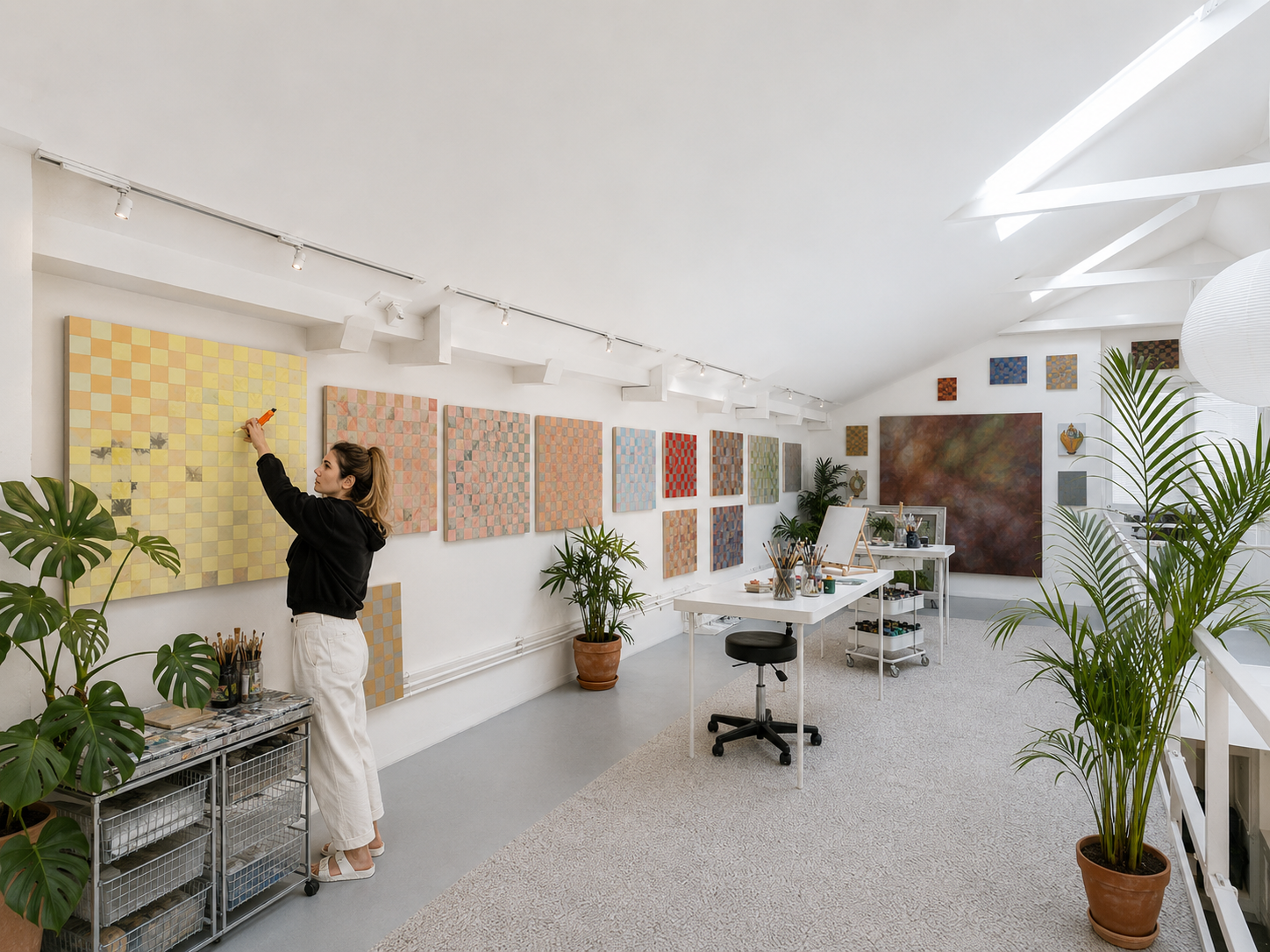
Diana Cerezino (b. 1988, Lisbon, Portugal) is a contemporary abstract painter based in Barreiro, Portugal. Working primarily with layered acrylic on canvas, she is best known for transforming the simple geometry of the grid into nuanced, atmospheric paintings.
Cerezino's practice explores perception, memory, and the relationship between structure and intuition. Rather than functioning as a fixed system, the grid serves as a flexible visual language through which each body of work develops its own rhythm, scale, and atmosphere. Through carefully built surfaces that combine transparency, texture, and restrained colour, her paintings invite slow looking and reflect the shifting nature of remembering, seeing, and knowing.
Cerezino's work has been presented in solo exhibitions including Long Night (2025) at AMAC Municipal Gallery, Barreiro; Cultivating Gazes (2024) at Plato Gallery, Évora; and Seeing and Seeing (2023) at Gallery Irmã Feia, Almada. Selected group exhibitions include Close Corners (2023) at Hilbert Raum, Berlin; Room Share (2021) at SafeHouse1, London; and Take Care (2021) at Galeria 3+1, Lisbon. Her paintings are held in the collections of Soho House, Vanguard and private collectors across the United Kingdom, USA, Canada, and Europe.
The Language of the Grid
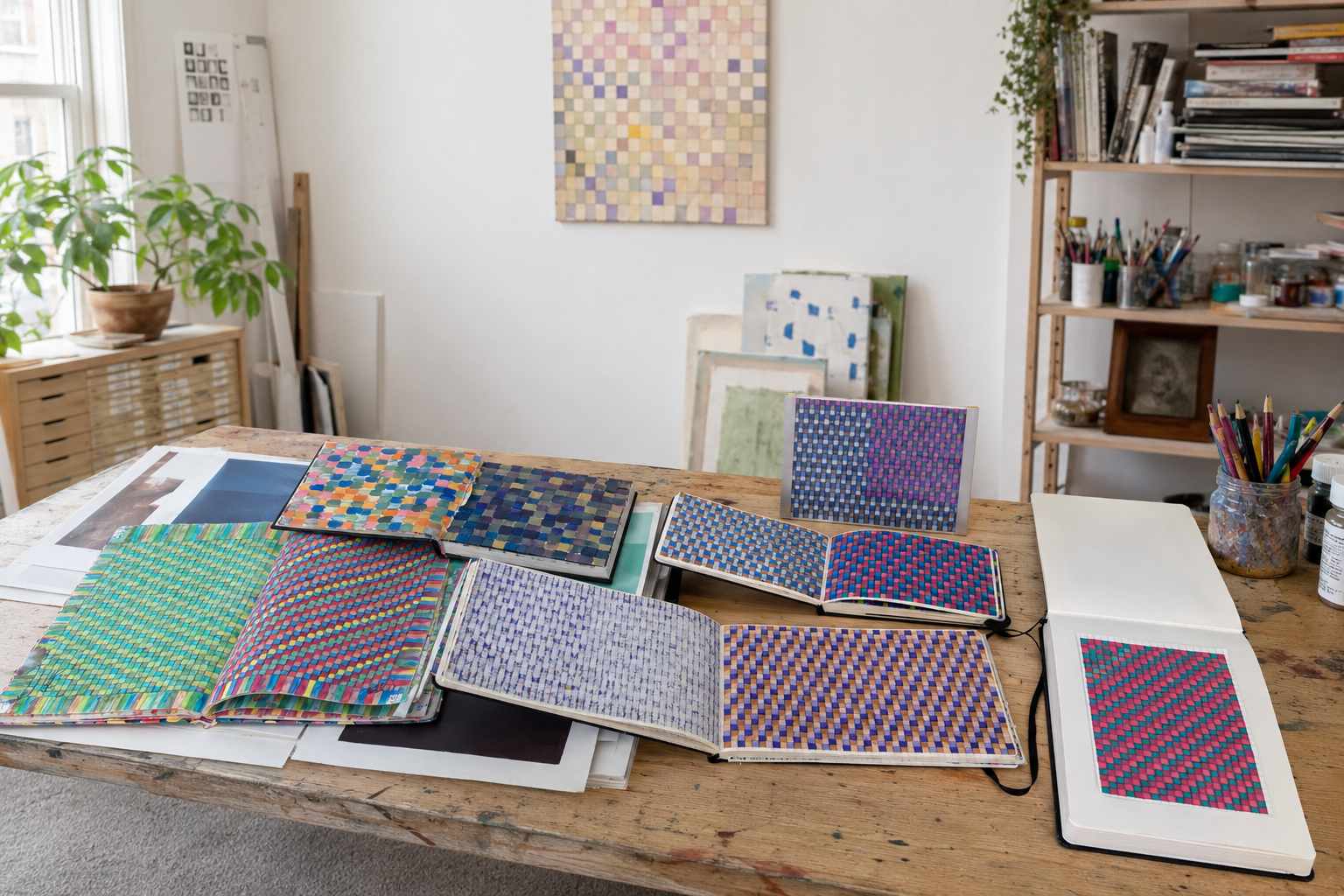
The grid has been central to Diana Cerezino’s visual language for as long as she can remember. Drawn to the structure of squared notebooks as a child, she instinctively filled them with repeated marks, colours, and patterns long before understanding their significance. That early fascination has evolved into the foundation of a painting practice that explores perception, memory, and the relationship between order and intuition.
Each painting begins with a grid of carefully measured squares that establishes an underlying structure rather than a predetermined outcome. Through successive layers of paint, subtle shifts in colour, variations in surface, and repeated gestures, the compositions gradually unfold. What first appears ordered slowly reveals movement, atmosphere, and traces of the hand, inviting prolonged observation and rewarding slow looking.
The grid is not a rigid system but a framework within which intuition can unfold. Repetition becomes both a method and a way of seeing, slowing the act of painting and allowing small decisions to accumulate into complex visual experiences. Structure and freedom exist simultaneously, with each square contributing to a larger rhythm shaped by variation, scale, light, and tone.
Each body of work develops its own visual language while remaining rooted in the same underlying framework. Rather than imposing fixed meanings, Cerezino’s paintings offer spaces where perception shifts over time, encouraging viewers to become aware of the subtle ways memory, light, and sensation shape what is seen.